Free Random Generator Tools for Everyday Decisions
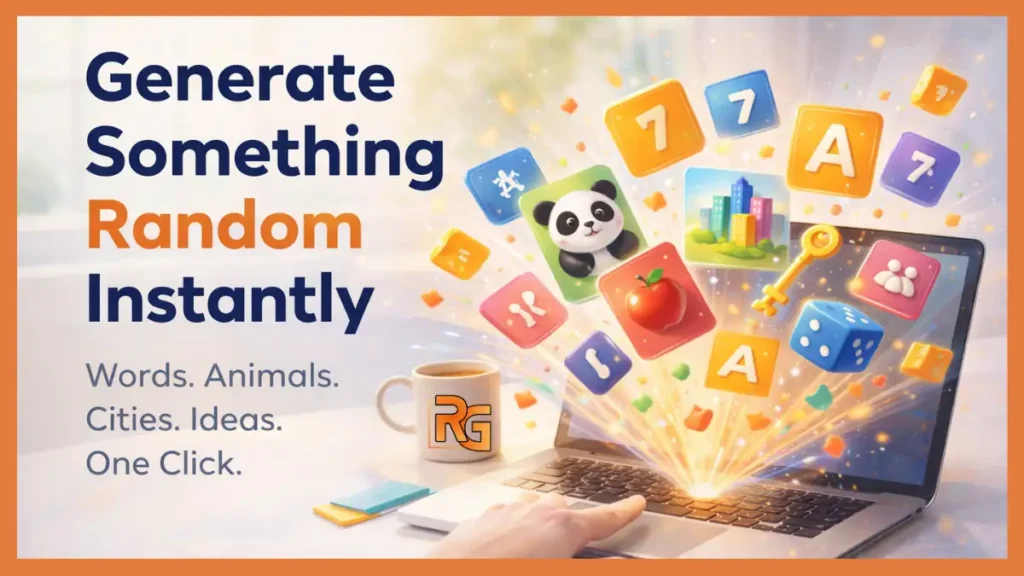
Pick a card, any card. Except here you don’t pick, we do, and we never peek. RandomGens is a free collection of random generator tools that pick a clear result for you in one click. Open a tool, tap generate, and you get something you can use right away: a meal with ingredients, a country with its capital, a pet name with a meaning, or a strong password built in your browser. Nothing asks you to create an account. Pick a tool below and get a result in one tap. People use these tools for classrooms, writing prompts, game nights, and small daily choices when a fair pick beats overthinking.
Why bother with a random generator?
A generator skips the habit of reaching for the same few choices. It does not know what you just saw or what feels safe, so the result is actually random.
Here is how a random generator on RandomGens works. Each tool draws from a curated list built for that tool. A fruit result includes calories per 100 g. A country result includes capital, region and three places to visit. A password is built from the length and character options you set, and it is never sent to our server. That is why these random generators feel more useful than a bare word on a screen: you get enough detail to act.
You do not need perfect true randomness for a classroom animal pick or a dinner idea. You need an unbiased draw from a list that was built on purpose. That is what these pages do.
Food & Drink
Meals and produce with real numbers from published nutrition data.
Animals, Nature and Places
Animals and pet names with meanings and origins, plus a random country or city.
Names
Names for teams and characters.
Words & Fun
Prompts, games and ideas for writing, debate, film and video.
Utility
Practical tools for passwords, barcodes and colors.
People are remarkably bad at being random
Ask a room to pick a number between 1 and 10 and roughly a third of them say 7. Ask for a random letter and you get A, B, or S far more often than chance allows. We are not choosing randomly, we are choosing what feels random, and those are very different things.
The biggest tell is repeats. Flip a real coin twenty times and you will almost certainly get a run of four or five the same in a row. Ask someone to write twenty fake coin flips and that run will be missing, because it looks wrong to them. Genuine randomness clumps, and people smooth it out without noticing.
That is the whole reason these tools are worth using. A generator has no sense of what looks right, no memory of what it just picked, and no preference for 7.
That fairness is what makes them useful to so many people. Teachers assign a different animal, country or debate motion without favourites. Writers and creators get a starting prompt, not a finished draft. Friends and families settle game night picks without a long argument. And on tired evenings, a food or drink pick cuts decision fatigue when the fridge is full and your brain is not.
Small tricks that make them better
Most people click once and leave. Fair enough. But a couple of habits make these tools far more useful.
Generate in batches. Need a name? Make ten, keep one. The first result is rarely the best.
Treat the result as a prompt, not a verdict. A random country is not the assignment. It is the door to it.
Stack the tools. A country, then a food from there, then a mood word. Three clicks, one surprisingly good idea.
Save the good ones. A five-minute session turns into a list you reuse for weeks.
Check the details before you rely on them. Where a tool shows numbers, such as calories or population, they come from published sources, and every list is curated by hand.
Frequently Asked Questions
Suggest a New Tool
Can’t find the generator you need? Tell us what to build next and we will ping you the moment it goes live.