
Random Fruit Generator: Pick a Random Fruit With a Photo
This random fruit generator gives you a random fruit as soon as the page opens, with its photo, calories per 100 grams and a one-line “Best For” note. Tap Generate Fruit for a new one.
Each pick comes from a list of more than 120 fruit names, so you might land on a banana, a persimmon or something you have never tasted, like rambutan or jabuticaba. The “Best For” note tells you what the fruit looks or tastes like. Keep the card with Download, or send it to a friend with Share. Use it to answer a “name a random fruit” game, pick a snack for the week, choose something to draw or settle what to buy at the market.
How to Use the Random Fruit Generator
- Open the page. A random fruit card is already showing. You don’t need to type or choose anything.
- Read the card. Check the fruit’s name, its photo, the calories per 100 g and the “Best For” line.
- Tap Generate Fruit for another. Every tap swaps in a fresh random pick from the whole list.
- Download or share it. Download saves the card as a PNG image. Share opens your phone’s share menu, or copies the result on a device without one.
What Each Fruit Card Shows
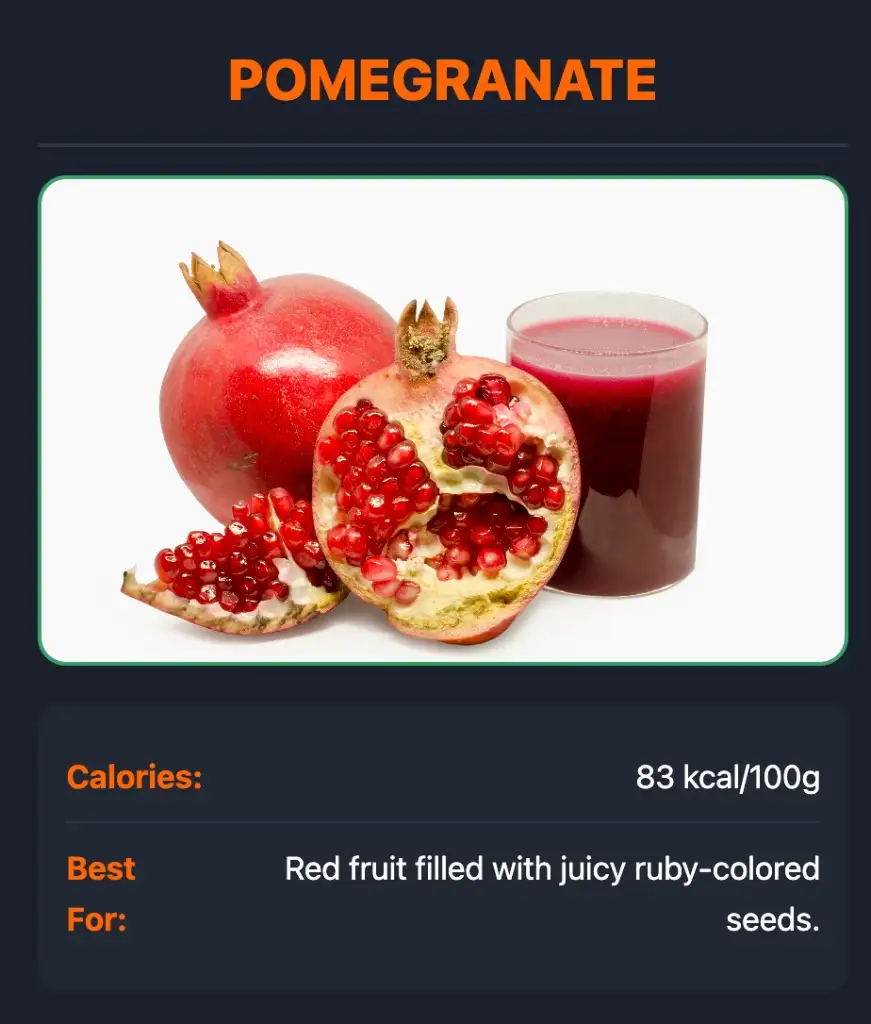
These three cards were copied straight from the tool.
|
Fruit |
Calories |
Best For line on the card |
|---|---|---|
|
Apple |
52 kcal/100g |
Grows on trees and comes in red, green, or yellow. |
|
Persimmon |
70 kcal/100g |
Orange tomato-shaped fruit that’s sweet when soft. |
|
Pineapple |
50 kcal/100g |
Spiky outside, sweet and juicy inside. |
The photo is pulled in from Wikipedia and Wikimedia Commons. If it’s slow to load, the name, calories and note still show, so you never lose your pick.
Give Me a Random Fruit: 12 Picks From the Tool
Here’s what “give me a random fruit” can look like. These are real cards from the generator, from the everyday to the rare.
|
Random fruit |
Calories per 100 g |
What the card says |
|---|---|---|
|
Kiwi |
61 |
Brown fuzzy skin, bright green inside with black seeds. |
|
Star Fruit |
31 |
Yellow fruit that looks like a star when sliced. |
|
Lychee |
66 |
Rough red shell hiding sweet white flesh. |
|
Rambutan |
68 |
Red fruit covered in soft hairy spikes. |
|
Mangosteen |
73 |
Purple shell hiding sweet white segments inside. |
|
Feijoa |
55 |
Green egg-shaped fruit with jelly-like center. |
|
Durian |
147 |
Spiky fruit famous for its strong smell. |
|
Cape Gooseberry |
53 |
Tiny orange fruit wrapped in a papery husk. |
|
Rose Apple |
25 |
Bell-shaped fruit that smells like roses. |
|
Salak |
82 |
Snake fruit, brown scaly skin, sweet flesh. |
|
Mamey Sapote |
134 |
Rough brown skin, salmon-colored sweet flesh. |
|
Cherimoya |
75 |
Heart-shaped fruit with custard-like texture. |
If a card shows a fruit you have never heard of, that’s the point. The photo helps you picture it, and the note gives you one clear fact to remember.
Random Fruit Names: The Full List by Type
Want to see every possible pick, or need a list of random fruits for a quiz or class? These are the fruit names inside the tool, grouped so they’re easy to scan.
Everyday Fruits
Apple, Banana, Orange, Grapes, Mango, Pineapple, Pear, Peach, Plum, Cherry, Kiwi, Apricot, Fig, Pomegranate, Nectarine and Date.
Berries
Strawberry, Blueberry, Raspberry, Blackberry, Cranberry, Gooseberry, Elderberry, Boysenberry, Mulberry, Bilberry, Cloudberry, Sea Buckthorn, Rowan Berry, Camu Camu, Açaí, Goldenberry and Grumichama. If you came here for a random berry, tap until one of these comes up, or pick from this list.
Citrus Fruits and Melons
Citrus: Orange, Lemon, Lime, Mandarin, Tangerine and Grapefruit. Melons: Watermelon, Cantaloupe and Honeydew.
Tropical Fruits
Papaya, Guava, Coconut, Dragon Fruit, Lychee, Passion Fruit, Jackfruit, Rambutan, Mangosteen, Durian, Longan, Star Fruit, Soursop, Sugar Apple, Sapodilla and Tamarind.
Rare and Exotic Fruits
Jabuticaba, Miracle Fruit, Ice Cream Bean, Cupuaçu, Canistel, Mamey Sapote, Abiu, Santol, Langsat, Duku, Bael, Baobab Fruit, Noni, Ackee, Medlar, Pawpaw, Peumo, Araza, Lúcuma, Mamoncillo, Jocote and Cacao.
One Fruit, Several Names
Some fruits are on the list under more than one name, so you learn what people call them in different places.
|
Fruit |
Other names you might get |
|---|---|
|
Dragon Fruit |
Pitaya, Pitahaya |
|
Star Fruit |
Carambola |
|
Sapodilla |
Chico Sapote |
|
Mamey Sapote |
Yellow Sapote, Mamey Colorado |
|
Cape Gooseberry |
Goldenberry, Uvilla, Poha Berry |
|
Sugar Apple |
Custard Apple |
|
Java Apple |
Wax Apple |
|
Surinam Cherry |
Pitanga |
|
Bael |
Wood Apple |
|
Mombin |
Hog Plum |
Because these fruits have extra entries, they come up a little more often than fruits with only one name.
Low Calorie Fruits in the Generator
Every card shows calories per 100 grams, so you can compare fruits fairly, whatever their size. Here are the lowest and highest values in the tool’s own data.
|
Lowest on the list |
kcal per 100 g |
Highest on the list |
kcal per 100 g |
|---|---|---|---|
|
Miracle Fruit |
14 |
Coconut |
354 |
|
Rose Apple |
25 |
Date |
282 |
|
Java Apple |
25 |
Tamarind |
239 |
|
Lemon |
29 |
Ackee |
151 |
|
Watermelon |
30 |
Durian |
147 |
|
Lime |
30 |
Mamey Sapote |
134 |
|
Star Fruit |
31 |
Plantain |
122 |
|
Strawberry |
32 |
Lúcuma |
120 |
Watery fruits like watermelon, strawberry and star fruit sit low. Fruits with more fat or sugar, like coconut and dates, sit much higher. A calorie number is one clue, not a verdict on whether a fruit is “good”. If you want fewer calories in a snack, tap a few times and keep the picks under about 60 kcal per 100 g.
Fruits That Need a Little Care
The tool’s own notes flag a few fruits that aren’t simple grab and eat snacks. Ackee must be ripe to eat safely. Quince is hard and is cooked before eating. Plantain is a cooking banana, and breadfruit is starchy and cooked like a vegetable. If you get one of these, read the note before you buy.
Random Fruit or Vegetable?
This tool only picks fruits. If you want a random fruit or vegetable, open the random vegetable generator in another tab and run both, then pick between the two cards. It shows a vegetable with a photo and calories too, so the two cards are easy to compare.
Plantain and breadfruit are a fun middle ground. They are fruits, but most kitchens cook them like vegetables.
Ways to Use a Random Fruit
A Random Fruit to Draw
Every card comes with a photo, so it doubles as a drawing prompt. Get a fruit, then draw it three ways: whole, cut in half and as a cartoon. Spiky and textured picks like durian, rambutan, salak and pineapple are great practice. When you want a break from fruit, the object generator gives you everyday things to sketch.
Your Weekly Shop and Snacks
Tap three times before you shop and buy one fruit you don’t usually get. Next week, swap it for a new pick. For a full plate, add a dish from the random food generator, which shows each dish with its ingredients and prep time. A random fruit also works for a smoothie or a dessert after one of these 15 quick dinner ideas.
Games, Quizzes and Classrooms
Play “name a random fruit”: one person reads the card’s note, and everyone guesses the fruit before the photo is shown. Teachers can use the calories to practice comparing numbers, or the alias table to show that one fruit can have several names. For an alphabet round, roll a letter with the random letter generator and ask who can name a fruit that starts with it.
Pick a Drink to Match
Got a citrus or tropical fruit? Pair it with a pick from the drink generator and see if the two go together.
Frequently Asked Questions
Can you give me a random fruit right now?
Yes. A random fruit shows up as soon as you open this page, with its name, photo, calories per 100 grams and a short note. If you want a different one, tap Generate Fruit and the card changes to a new random pick from the full list. You can keep tapping as many times as you like.
How many fruits are in the random fruit generator?
The list has more than 120 fruit names. Some fruits appear under more than one name, such as dragon fruit, pitaya and pitahaya, or sapodilla and chico sapote, so the tool covers about 100 different fruits. That mix runs from everyday picks like apples and bananas to rare ones like jabuticaba, canistel and ice cream bean.
Is this a fruit name generator?
Yes, if you need the name of a real fruit. Every pick is a real fruit you can eat, shown with a photo and a short note, so it works well for games, quizzes, stories and lists. It doesn’t make up fantasy fruit names. For a full list of names, scroll up to the fruit list grouped by type.
Which fruit has the fewest calories in the generator?
In the tool’s data, miracle fruit has the lowest value at 14 kcal per 100 grams. Rose apple and Java apple follow at 25, then lemon at 29 and watermelon and lime at 30. At the other end, coconut has the highest value at 354 kcal per 100 grams, followed by dates at 282 and tamarind at 239.
Can I get a random fruit or vegetable?
This tool picks fruits only. For a vegetable, use the random vegetable generator, which also shows a photo and calories. Run both and choose between the two cards if you want a random fruit or vegetable. Plantain and breadfruit are a fun middle ground, because they are fruits that most people cook like vegetables.
Does the random fruit generator show pictures?
Yes. Every card shows a photo of the fruit, pulled in from Wikipedia and Wikimedia Commons, above the calories and the “Best For” note. If a photo is slow to load, the fruit’s name and details still appear. When you press Download, the photo is saved as part of the card image, so you can keep or print it.
What fruit should I draw?
Let the generator choose. Open the page, look at the photo on the card, and draw that fruit. If you want a challenge, keep tapping until you land on a textured fruit like durian, rambutan, salak or pineapple. Try drawing it whole, cut in half and as a cartoon. Download the card so you can keep the photo next to your paper.
What is the most random fruit?
There’s no official answer, but some picks in this tool surprise almost everyone. Miracle fruit, ice cream bean, jabuticaba, canistel and baobab fruit are good examples. Tap Generate Fruit a few times and you’ll likely meet at least one fruit you have never seen in a supermarket. The card’s note tells you what makes it unusual.
Related Tools
Landed on a fruit? Pair it with food, a vegetable, a group game, a video hook or a fresh password for the account you use to save recipes.
- Random Food Generator: a real dish with origin and ingredients for theme nights.
- Random Vegetable Generator: a vegetable card with photo and calories for kitchen drills.
- Would You Rather Generator: two-choice questions for parties, class and car rides.
- YouTube Hook Generator: opening lines for videos when you need a scroll stopper.
- Random Password Generator: strong browser-made passwords when accounts need a refresh.