Low Calorie Fruits for Weight Loss (Calories Chart + Smart Choices)

Try our fruit generator tool
Weight loss becomes easier when food choices are simple, filling, and naturally lower in calories. That’s where low calorie fruits come in. Instead of cutting food completely, a smarter approach is to replace high-calorie snacks with fruits that provide hydration, fiber, and essential nutrients without adding excess energy intake.
Many people eat healthy but still don’t see results because their food choices are not structured. Fruits with high water content and fiber help control hunger, reduce cravings, and support consistent fat loss over time. They also fit easily into daily routines, whether you prefer light breakfasts, mid-day snacks, or post-workout options.
This guide focuses on low calorie fruits for weight loss, including how they work, why they are effective, and how to use them practically. If you ever feel stuck choosing what to eat, you can also explore a Random Fruit Generator to discover new healthy options and diversify your diet naturally.
What Are Low-Calorie Fruits and Why They Help in Weight Loss

Low calorie fruits are those that provide fewer calories per serving while still offering high nutritional value. These fruits are typically rich in water, fiber, and essential vitamins, making them ideal for people trying to reduce overall calorie intake without feeling deprived.
The key advantage of these fruits is volume eating. You can consume a larger portion while still keeping your daily calorie intake under control. For example, fruits like watermelon, strawberries, and oranges contain a high percentage of water, which helps you feel full faster compared to processed snacks.
Fiber helps control hunger and supports steady energy levels. Low calorie fruits also support hydration, which is often overlooked in weight management. A well-hydrated body performs better, improves metabolism efficiency, and reduces unnecessary snacking that is often mistaken for hunger.
According to Harvard T.H. Chan School of Public Health, diets rich in fruits and plant-based foods are linked with better weight control and overall health outcomes.
How Calories in Fruits Affect Fat Loss (Simple Explanation)
Fat loss is directly connected to one basic principle: calorie balance. When your body uses more energy than it consumes, it starts burning stored fat. Fruits play an important role here because they allow you to eat more volume while consuming fewer calories.
Low calorie fruits work in three powerful ways:
1. They reduce total calorie intake naturally
Instead of eating processed snacks, choosing fruits lowers your daily calorie consumption without requiring strict dieting.
2. They support consistent eating habits
Unlike extreme diets, including fruits makes your plan sustainable. You are less likely to quit because you are not restricting yourself completely.
For example, replacing a high-calorie dessert with a bowl of berries can save hundreds of calories while still satisfying your sweet cravings.
If you want to explore more structured nutrition insights and calorie balance concepts, you can also check resources like Mayo Clinic, which explain how food choices impact long-term fat loss.
Complete Low-Calorie Fruits List (With Calories Chart)
A well-structured low calorie fruits list is not just about numbers, it is about understanding how each fruit behaves inside your body. Calories matter, but fiber, water content, and how long a fruit keeps you full matter even more. Many people focus only on calorie counts and ignore satiety, which leads to constant snacking and slow progress.
Fruits Under 50 Calories
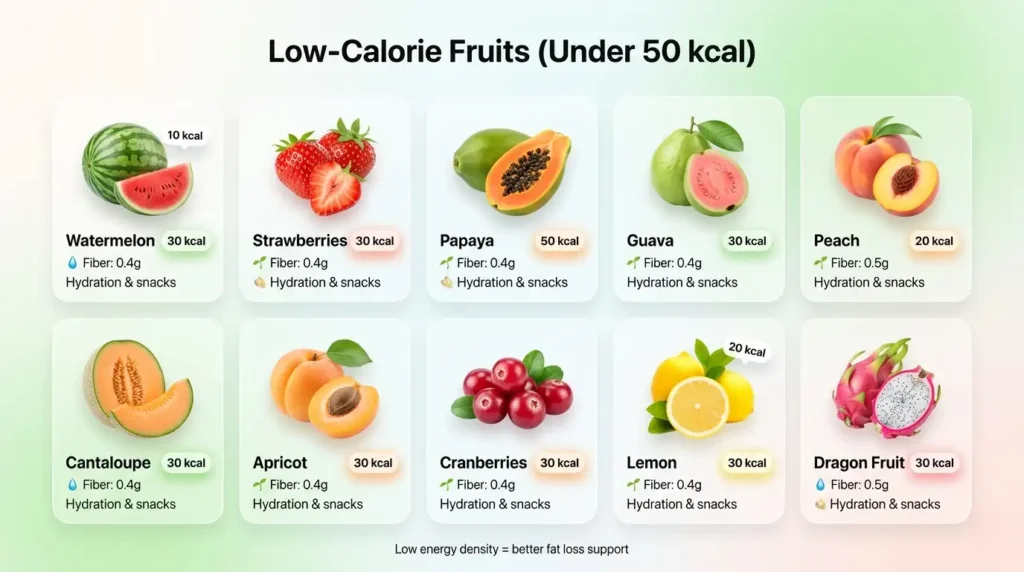
These fruits are extremely light in energy but high in volume. They are ideal for frequent eating, especially when you feel the urge to snack between meals. Because of their high water content and moderate fiber, they help reduce unnecessary calorie intake without leaving you hungry. These diet-friendly fruits for weight loss are effective because they reduce overall calorie intake while keeping you full.
|
Fruit |
Calories (per 100g) |
Fiber |
Best Use |
|
Watermelon |
30 |
0.4g |
Evening snacks, hydration, post-meal cravings |
|
Strawberries |
32 |
2g |
Low-calorie desserts, smoothies |
|
Papaya |
43 |
1.7g |
Morning digestion support |
|
Guava |
44 |
5g |
Hunger control, mid-day snack |
|
Peach |
39 |
1.5g |
Light snack, quick refreshment |
|
Cantaloupe |
34 |
0.9g |
Hydration-focused meals |
|
Apricot |
48 |
2g |
Small portion snacks |
|
Cranberries |
46 |
1.6g |
Appetite control, mixing with yogurt |
|
Lemon |
29 |
2.8g |
Detox water, metabolism support |
|
Dragon Fruit |
50 |
3g |
Variety, light dinner option |
Fruits Under 100 Calories
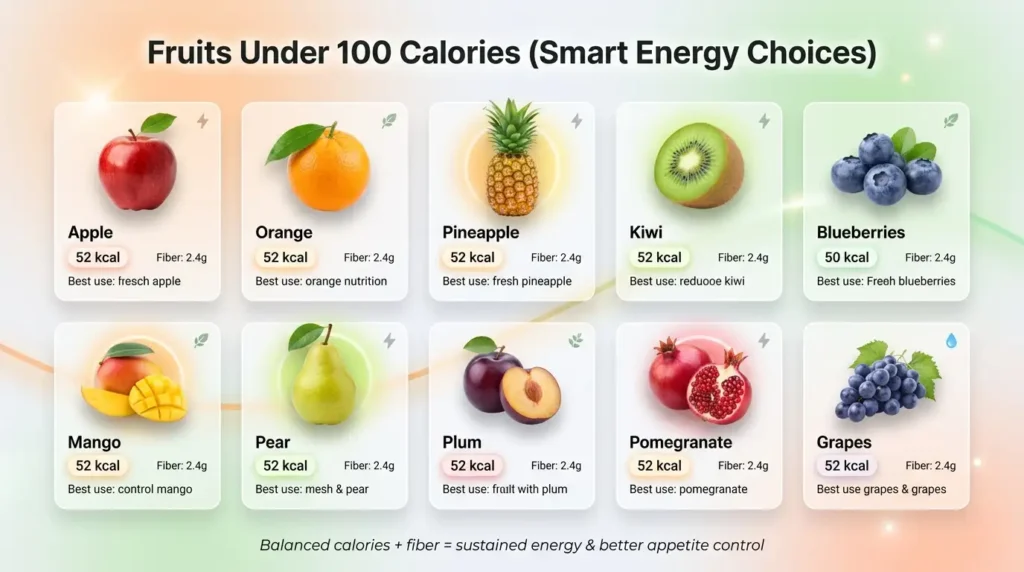
These fruits offer a balance between energy and nutrition. They are slightly higher in calories but provide more sustained energy, making them useful for active individuals or those who need something more filling than very light fruits.
|
Fruit |
Calories (per 100g) |
Fiber |
Best Use |
|
Apple |
52 |
2.4g |
Pre-meal hunger control |
|
Orange |
47 |
2.2g |
Hydration and immunity support |
|
Pineapple |
50 |
1.4g |
Post-meal sweetness replacement |
|
Kiwi |
61 |
3g |
Metabolism and digestion |
|
Blueberries |
57 |
2.4g |
Antioxidant-rich snacks |
|
Mango (controlled) |
60 |
1.6g |
Energy boost in small portions |
|
Pear |
57 |
3.1g |
Long-lasting fullness |
|
Plum |
46 |
1.4g |
Light snack between meals |
|
Pomegranate |
83 |
4g |
Nutrient-dense option |
|
Grapes |
69 |
0.9g |
Quick energy, portion control needed |
High-Volume Low-Calorie Fruits (Best for Fullness)
These fruits are not just low in calories, they are designed by nature to maximize fullness. They contain a combination of water and fiber that slows down digestion and reduces hunger signals.
|
Fruit |
Calories (per 100g) |
Fiber |
Best Use |
|
Watermelon |
30 |
0.4g |
High-volume eating, night cravings |
|
Grapefruit |
42 |
1.6g |
Fat-loss focused diets |
|
Orange |
47 |
2.2g |
Mid-day hunger control |
|
Strawberries |
32 |
2g |
Dessert replacement |
|
Papaya |
43 |
1.7g |
Digestive support |
|
Guava |
44 |
5g |
Strong appetite control |
|
Apple |
52 |
2.4g |
Pre-meal strategy |
|
Pear |
57 |
3.1g |
Long satiety meals |
|
Melon |
34 |
0.9g |
Hydration + fullness |
|
Peach |
39 |
1.5g |
Frequent snacking option |
High-volume fruits naturally reduce calorie intake by increasing fullness. This is one of the most sustainable approaches to fat loss because it does not rely on strict discipline. It works by aligning with how your body naturally responds to food.
If you want to build a more balanced plate beyond fruits, you can also explore combinations using a vegetable generator to discover low-calorie vegetables that complement these fruits and improve overall diet quality.
Best Fruits for Weight Loss (Backed by Real Benefits)
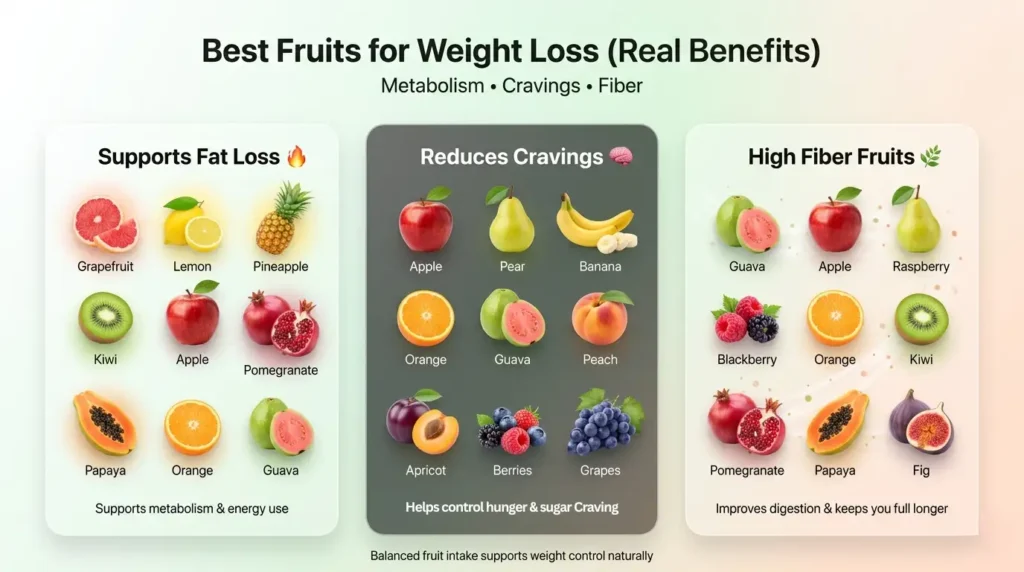
Not all fruits contribute equally to fat loss. Some improve metabolism, others reduce hunger, and some help stabilize blood sugar.
Fruits That Support Fat Loss Naturally
Certain fruits help your body use energy more efficiently and reduce unnecessary fat storage. These are not “fat-burning” in a magical sense, but they support the biological processes that lead to fat loss.
- Grapefruit
- Lemon
- Pineapple
- Kiwi
- Apple
- Pomegranate
- Blueberries
- Papaya
- Orange
- Guava
These fruits improve digestion, support enzyme activity, and help maintain stable energy levels. When your body processes food efficiently, it is less likely to store excess calories as fat.
Fruits That Reduce Hunger and Cravings
Controlling appetite is more important than counting calories. These fruits help reduce sudden cravings and emotional eating.
- Apple
- Pear
- Banana (controlled portion)
- Orange
- Guava
- Peach
- Plum
- Apricot
- Berries
- Grapes (limited quantity)
They satisfy cravings without causing sharp spikes in blood sugar, which often lead to overeating later.
Fruits with High Fiber for Weight Control
Fiber is one of the most powerful tools for long-term weight management. It slows digestion, improves gut health, and keeps you full for longer periods.
- Guava
- Apple
- Pear
- Raspberry
- Blackberry
- Orange
- Kiwi
- Pomegranate
- Papaya
- Fig (small portions)
High-fiber fruits also support gut bacteria, which plays a role in metabolism and fat regulation. According to Harvard T.H. Chan School of Public Health, diets rich in fiber are consistently linked with better weight control and reduced risk of overeating.
Best Fruits for Belly Fat and Diabetes-Friendly Diets
Certain fruits are especially helpful for people focusing on belly fat reduction and blood sugar control. These fruits are lower in sugar, higher in fiber, and support stable energy levels.
Best options include:
- Apple
- Guava
- Pear
- Berries
- Grapefruit
- Orange
- Kiwi
- Papaya
- Plum
- Peach
These fruits digest slowly and prevent sudden spikes in blood sugar, which is important for both fat loss and long-term health.
For people managing diabetes or insulin resistance, choosing the right fruits can make a significant difference. Pairing fruits with protein or fiber-rich foods further improves their effectiveness.
This approach is often recommended in structured diet plans because it balances nutrition without restricting food variety.
When to Eat Fruits for Weight Loss (Timing Matters)
Timing is one of the most ignored factors in weight loss. Many people focus only on what to eat, but when you eat can significantly influence fat loss, digestion, and hunger control. Low calorie fruits for weight loss work best when aligned with your body’s natural energy cycles, not randomly throughout the day.
Your body processes carbohydrates, natural sugars, and fiber differently depending on the time. In the morning, your metabolism is more active and capable of using energy efficiently. At night, your activity level drops, which means excess intake can be stored instead of used.
A smart fruit timing strategy helps you:
- Reduce unnecessary calorie storage
- Control cravings naturally
- Improve digestion and gut health
- Maintain consistent energy levels
Morning vs Night: Best Time to Eat Fruits
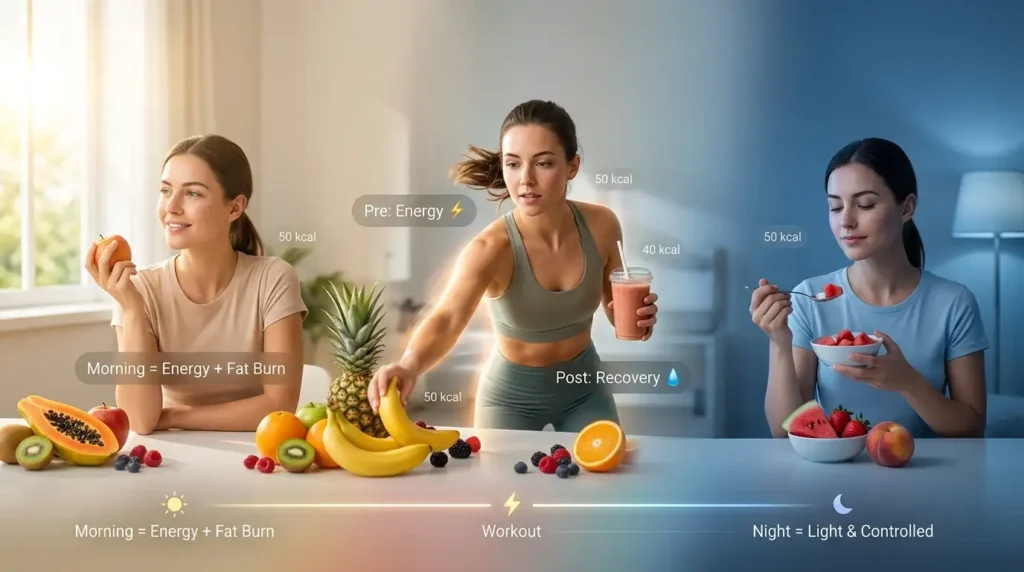
Morning is generally the most effective time to consume fruits, especially low calorie fruits list items that provide hydration, fiber, and quick energy. After an overnight fast, your body responds well to natural sugars, using them as fuel rather than storing them.
Fruits that work best in the morning:
- Apple
- Papaya
- Orange
- Guava
- Kiwi
- Pineapple
- Watermelon
- Berries (strawberry, blueberry)
- Pear
- Dragon fruit
- Pomegranate
These fruits support digestion, activate metabolism, and reduce mid-morning hunger. Starting your day with fiber-rich fruits also improves gut movement, which directly affects fat loss efficiency.
Eating fruits late at night is not harmful by default, but portion size and fruit type matter. High-water and low-sugar fruits are better options if you need something light.
Fruits suitable for evening or night:
- Watermelon
- Strawberries
- Peach
- Plum
- Cantaloupe
- Grapefruit
- Apricot
- Kiwi
- Papaya
- Guava
Late-night cravings are often not hunger but habit. Replacing heavy snacks with these fruits can reduce calorie intake without making you feel restricted.
Pre-Workout and Post-Workout Fruit Choices
Workout timing changes how your body uses food. Before exercise, you need quick energy. After exercise, your body needs recovery and nutrient replenishment.
Pre-workout fruits (energy support):
- Banana (controlled portion)
- Apple
- Dates (small quantity)
- Grapes
- Mango (limited portion)
- Pineapple
- Orange
- Kiwi
- Papaya
- Berries
These fruits provide fast-digesting carbohydrates that fuel your workout without heaviness. The key is to keep portions moderate to avoid excess calorie intake.
Post-workout fruits (recovery support):
- Watermelon
- Banana
- Pineapple
- Orange
- Kiwi
- Papaya
- Pomegranate
- Berries
- Apple
- Grapefruit
After exercise, fruits help restore glycogen levels and support recovery without adding unnecessary calories. Combining fruits with hydration improves overall performance and fat loss consistency.
For better variation in your routine, you can also explore different combinations using a drink generator to create low-calorie fruit-based drinks that support hydration and recovery.
Fruits to Avoid or Limit During Weight Loss
Weight loss does not require eliminating fruits, but some fruits are higher in natural sugars and calories. These can slow progress if consumed in large amounts without awareness.
The issue is not the fruit itself, but portion size and frequency.
High Sugar Fruits You Should Watch
Some fruits are calorie-dense and can quickly increase your daily intake if not controlled. These are not unhealthy, but they require mindful consumption.
- Mango
- Banana
- Grapes
- Chikoo (Sapodilla)
- Custard apple
- Lychee
- Jackfruit
- Fig (fresh and dried)
- Dates
- Raisins
These fruits provide more energy, which can be useful for active individuals, but less ideal for strict fat loss phases. For example, a handful of raisins can contain more calories than a full bowl of strawberries.
A practical approach is to use these fruits strategically:
- Around workouts
- In small portions
- Combined with fiber-rich foods
Portion Control for Calorie-Dense Fruits
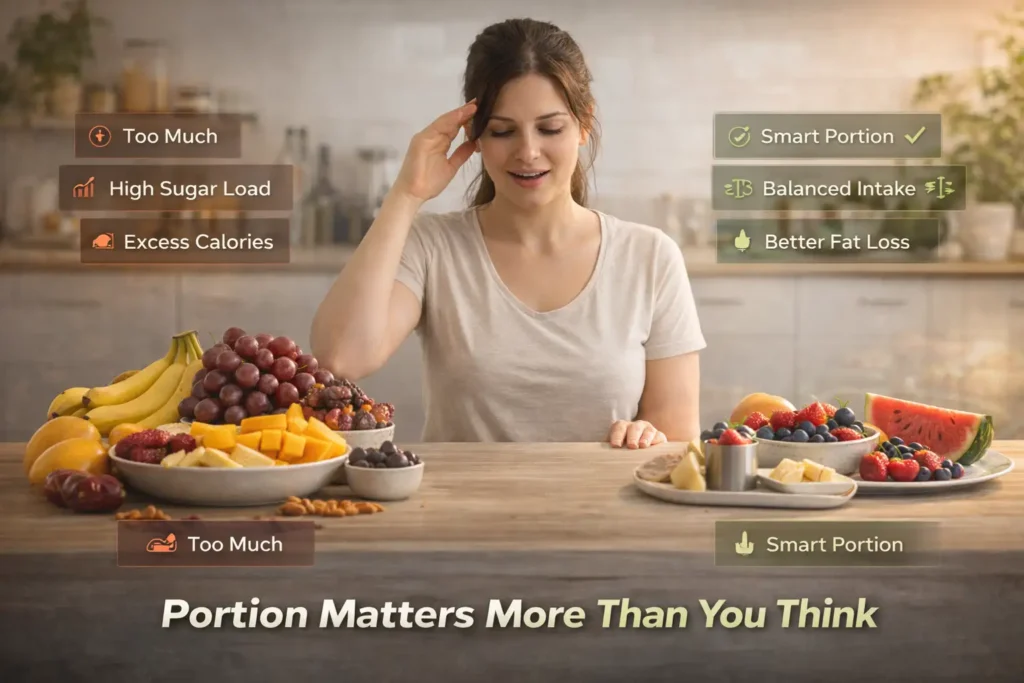
Portion control is where most people struggle. Even healthy foods can lead to weight gain if consumed excessively.
Instead of removing high-calorie fruits, manage them intelligently:
- Limit banana to one small serving per day
- Keep mango portions under one cup
- Use grapes as a small snack, not a full bowl
- Add dates only when energy is needed
- Mix high-calorie fruits with low calorie fruits to balance intake
Fruits that work well for controlled portions:
- Banana
- Mango
- Grapes
- Pomegranate
- Fig
- Dates
- Jackfruit
- Lychee
- Custard apple
- Sapodilla
From a practical standpoint, combining high and low calorie fruits is one of the smartest strategies. For example, mixing a few grapes with watermelon creates volume without increasing calories significantly.
How to Use Low-Calorie Fruits in Your Daily Diet
Using healthy low-calorie options for weight loss is not just about eating them randomly. The real impact comes when you integrate them into your daily routine in a structured way. From experience, people who plan how they consume fruits tend to stay consistent, while those who eat them occasionally see very little progress.
The idea is simple. Replace high-calorie, low-nutrition foods with fruits that provide fiber, hydration, and natural sweetness. This not only reduces calorie intake but also improves digestion, energy levels, and overall eating habits.
A practical approach is to divide your day into small eating windows where fruits can naturally fit:
- Morning for digestion and energy
- Mid-day for hunger control
- Evening for light snacking
This method removes the need for strict dieting and instead builds a system that works long term.
Smoothies and Juice Ideas
Smoothies are one of the easiest ways to include multiple low calorie fruits in a single meal without making it feel repetitive. However, the key is to keep them balanced. Adding too many high-sugar fruits or extra sweeteners can quickly turn a healthy drink into a calorie-heavy option.
From practical use, the best fruit blends are those that combine fiber, hydration, and light sweetness.
Fruits that work well in smoothies:
- Strawberry
- Blueberry
- Kiwi
- Papaya
- Apple
- Pineapple
- Orange
- Guava
- Watermelon
- Peach
Instead of using sugar or syrups, combining naturally sweet fruits with high-water fruits creates a better balance. For example, mixing pineapple with watermelon or berries with orange gives both flavor and volume without increasing calories unnecessarily.
Another effective strategy is to keep low-calorie drinks slightly thick rather than fully liquid. This improves satiety and prevents quick hunger after consumption.
If you want to experiment with different combinations without repeating the same recipes, you can explore ideas using a drink generator to create low-calorie fruit-based drinks that fit your routine.
Using a high-speed blender can improve texture and help retain fiber, which makes smoothies more filling and effective for weight control.
Snack Replacements for Weight Loss
Snacking is where most people lose control of their diet. Packaged snacks, even in small quantities, often contain more calories than expected. Replacing them with fruits is one of the simplest and most effective changes.
Fruits that work best as snack replacements:
- Apple
- Pear
- Orange
- Guava
- Plum
- Peach
- Apricot
- Grapefruit
- Strawberries
- Blueberries
They help control cravings without increasing overall calorie intake. For example, eating an apple in the afternoon can reduce the need for high-calorie snacks later in the evening.
A useful habit is to prepare fruits in advance. Keeping sliced fruits ready makes it easier to choose them over processed options. Convenience plays a major role in consistency.
Meal Planning with Fruits
Including fruits in meal planning improves both structure and results. Instead of treating fruits as an add-on, they should be part of your daily food system.
In practical use, the most effective way to use fruits in meals is:
- Morning: light fruits like papaya, apple, or orange
- Mid-day: fiber-rich fruits like pear or guava
- Evening: low-calorie fruits like watermelon or berries
Fruits that work well in meal planning:
- Papaya
- Apple
- Orange
- Pear
- Guava
- Kiwi
- Pineapple
- Watermelon
- Strawberry
- Pomegranate
Combining fruits with other foods can also improve balance. For example, adding fruits to yogurt or salads creates a more complete meal without increasing calories significantly.
Smart Ways to Discover New Healthy Fruits
One of the biggest reasons people stop following a healthy diet is boredom. Eating the same fruits every day reduces motivation and makes it harder to stay consistent. Exploring new options keeps your diet interesting and improves nutrient variety.
In real daily routines, adding even one new fruit per week can make a noticeable difference in both enjoyment and consistency.
Using Random Fruit Generator for Diet Ideas
When you don’t know what to eat, decision fatigue becomes a real problem. Instead of overthinking, using a Random Fruit Generator can help you discover fruits you may not normally choose.
This approach works well because:
- It removes the need to decide every time
- It introduces variety naturally
- It encourages trying new healthy options
For example, instead of always choosing apples or bananas, you might discover fruits like dragon fruit, guava, or kiwi, which provide different nutrients and flavors.
Over time, this builds a more diverse and balanced diet without extra effort.
Common Mistakes People Make When Eating Fruits for Weight Loss
A lot of people believe that simply adding fruits to their diet will automatically lead to fat loss. In reality, the way fruits are consumed matters just as much as the type of fruit. From experience, most plateaus happen not because fruits are ineffective, but because they are used incorrectly within the overall diet.
One of the most common mistakes is ignoring portion size. Even healthy foods can slow progress when eaten without awareness. Fruits like mango, banana, and grapes are nutrient-rich, but they also contain higher natural sugar levels. Eating them in large amounts, especially at night, can increase total calorie intake without you realizing it.
Another mistake is relying only on fruit-based meals. While low calorie fruits are helpful, they do not provide complete nutrition on their own. Skipping balanced meals and replacing everything with fruits often leads to energy crashes, cravings, and eventually overeating.
Many people also consume fruit juices instead of whole fruits. Juicing removes fiber, which is the main factor that controls hunger. A glass of juice can contain the calories of multiple fruits but without the satiety, making it easier to exceed your daily intake.
Timing is another overlooked factor. Eating fruits randomly throughout the day, especially late at night in large portions, can affect how your body uses energy. Aligning fruit intake with your activity level improves results significantly.
Common mistakes to avoid:
- Eating high-sugar fruits in large quantities
- Replacing full meals with fruits only
- Drinking fruit juices instead of eating whole fruits
- Ignoring timing and eating late-night portions
- Not combining fruits with a balanced diet
From practical observation, people who correct these small habits see better consistency and faster progress without needing extreme diets.
Low-Calorie Fruits vs High-Calorie Foods (Quick Comparison Table)
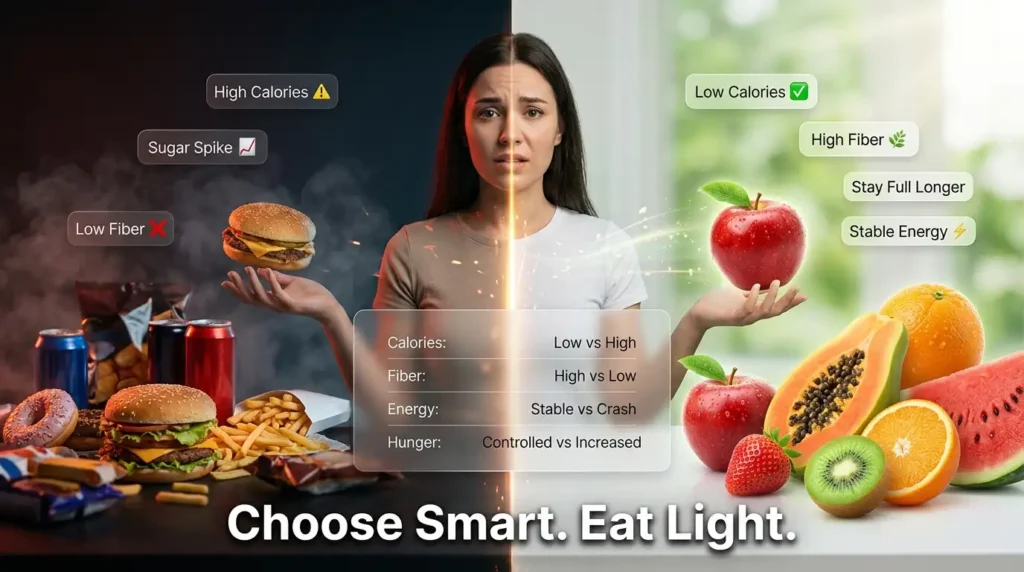
Understanding the difference between low calorie fruits and typical high-calorie foods helps you make better decisions without overthinking your diet. The key difference is not just calories, but how those calories affect hunger, digestion, and long-term habits.
|
Factor |
Low-Calorie Fruits |
High-Calorie Processed Foods |
|
Calories per serving |
Low to moderate |
High |
|
Fiber content |
High (supports fullness) |
Very low |
|
Satiety level |
High (keeps you full longer) |
Low (leads to more eating) |
|
Nutritional value |
Rich in vitamins and minerals |
Often low in nutrients |
|
Digestion impact |
Supports gut health |
Can slow digestion |
|
Sugar type |
Natural sugars with fiber |
Added sugars |
|
Energy release |
Gradual and stable |
Quick spikes and crashes |
|
Long-term effect |
Supports weight control |
Encourages weight gain |
Examples of low calorie fruits:
- Apple
- Orange
- Strawberry
- Papaya
- Guava
- Watermelon
- Kiwi
- Peach
- Pear
- Grapefruit
Examples of high-calorie foods to limit:
- Packaged snacks
- Sugary desserts
- Fried foods
- Processed bakery items
- Sweetened beverages
The practical takeaway is simple. Low calorie fruits support your body naturally, while processed foods often increase hunger and disrupt eating patterns. Replacing even one daily snack with fruits can significantly reduce total calorie intake over time.
Simple Daily Fruit Diet Plan for Weight Loss
A structured daily plan makes it easier to stay consistent without overthinking food choices.
Example:
Morning:
Papaya + apple (light digestion + hydration)
Mid-day:
Guava + orange (fiber + sustained energy)
Evening:
Watermelon + berries (low calorie + high volume)
Post-workout:
Banana (small) + pineapple (recovery support)
This type of structure removes guesswork and helps maintain a calorie deficit naturally.
FAQs About Low-Calorie Fruits and Weight Loss
Do low calorie fruits really help with weight loss or is it a myth?
Low calorie fruits support weight loss when used correctly. They help reduce overall calorie intake while keeping you full due to their fiber and water content. Unlike processed foods, they provide nutrients along with energy, which makes them more sustainable for long-term fat loss. The key is consistency and portion control, not just occasional consumption.
Which fruits are best for weight loss and daily eating?
Fruits that combine low calories with high fiber are the most effective. Options like apple, guava, orange, berries, papaya, and pear work well because they reduce hunger and improve digestion. Including a mix of these fruits throughout the day creates better balance compared to relying on a single option.
Can eating fruits at night slow down fat loss?
Fruits at night are not harmful if chosen and portioned correctly. Low-calorie, high-water fruits like watermelon, strawberries, or papaya can be suitable. However, eating large portions of high-sugar fruits late at night may increase calorie intake and slow progress. Timing and portion awareness make the difference.
Is fruit sugar bad for weight loss?
Natural sugar in fruits behaves differently from added sugar. Because fruits contain fiber, the absorption of sugar is slower, which prevents sharp spikes in blood sugar levels. This makes fruits a healthier option compared to processed sweets. Problems usually arise only when portions are excessive.
How many fruits should I eat daily for weight loss?
A balanced approach works best. Two to three servings of fruits per day is generally effective for most people. Spreading them across different times, such as morning and mid-day, helps maintain energy levels and prevents overeating later.
Are smoothies good for weight loss or should I avoid them?
Smoothies can support weight loss if prepared correctly. Using whole fruits, avoiding added sugar, and keeping portions moderate are important. Thick smoothies with fiber are more effective than thin juices because they improve satiety and reduce hunger.
Why do I still feel hungry after eating fruits?
This usually happens when fruits are consumed alone without considering fiber or portion balance. Choosing high-fiber fruits like apple, pear, or guava, or combining fruits with other foods, can improve satiety and reduce frequent hunger.
What is the biggest mistake people make when using fruits for fat loss?
The biggest mistake is assuming that all fruits can be eaten in unlimited amounts. Even healthy foods require balance. Portion control, timing, and variety are essential for achieving consistent results.
Final Thoughts: Choosing the Right Fruits for Sustainable Weight Loss
Sustainable weight loss is not about strict restrictions or eliminating entire food groups. It is about making smarter, more consistent choices that align with how your body works. Low calorie fruits for weight loss provide a practical way to reduce calorie intake while maintaining nutrition and satisfaction.
The most effective approach is to combine different types of fruits based on your needs. Use high-volume fruits to control hunger, fiber-rich fruits to improve digestion, and balanced fruits for energy when required. This creates a system that works naturally without forcing discipline.
From experience, the people who succeed are not the ones who follow perfect plans, but those who follow simple habits consistently. When fruits become part of your daily routine instead of an occasional addition, the results become more stable and long-lasting.
Weight loss becomes easier when food choices are simple, consistent, and practical. Using low calorie fruits for weight loss in a structured way helps reduce calorie intake naturally while maintaining energy and satisfaction. The focus should be on smart selection, proper timing, and portion balance rather than restriction.